CONTACT US
 NEWSLETTER SIGN UP
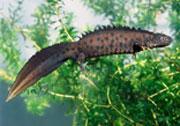 Newts
Newts
A colony of great crested newts was discovered on the site following the grant of planning permission. Caseys subsequently obtained a licence from English Nature to move the newts progressively to new habitats on the site and no landfill may take place in any area until they have been cleared of newts This involved collecting the newts from the site and building holding ponds until a proper environment could be established for them. Areas of the site have been systematically isolated by the use of plastic walls. The newts in these areas were collected in a series of buckets and from under carpet squares around the perimeters and removed to the holding ponds. It was anticipated that this would delay the operation by approximately 2 years. That was in 2003. Six years and over 7000 newts later, the site has still not been cleared!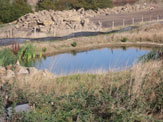
The cost of humanely removing the newts, ecological advice and monitoring, and the provision of new ponds on the site, has been financed by Casey’s. It is believed to be many hundreds of thousands of pounds.
Update September 2010
To date the areas that have been/will soon be released back for use by the rescued newts and other amphibians have encompassed: –
- Sixteen new ponds of suitable size, shape and profile for use by breeding amphibians. The ponds are surrounded by a bund to facilitate rainfall catchment to sustain the water-levels in the ponds.
- Terrestrial habitats comprising grassland composed from fine-leaved grass species that newts are able to forage within and shelter beneath.
- Numerous hibernacula for use by sheltering and hibernating amphibians.
- . Native tree and shrub planting to maintain habitat connectivity between receptor areas.
These habitats are designed to provide sustainable habitats for the maintenance of the Great Crested Newt population at a favourable conservation status in their natural range over the long term.
The areas being worked currently (July 2010) will create an additional three new ponds with surrounding terrestrial habitats and hibernacula.
Monitoring of the new ponds in 2008 and 2009 has demonstrated that all new ponds support breeding Great Crested Newts and contribute to the conservation of the large population at the site.
Other Wildlife
In addition to the creation of habitats for amphibians the areas of habitat creation support a variety of other wildlife.
The grasslands support a higher percentage cover of legumes (White Clover, Red Clover and Black Medick). This species composition is favourable for use by breeding butterflies and site visits have revealed the presence of Large White, Orange Tip, Common Blue, Peacock, Small White and Small Tortoiseshell.
The planted, native trees and shrubs also provide additional shelter for amphibians. Once the trees and shrubs become established they will provide habitats for breeding and feeding passerine birds (including UK BAP Priority Species such as Dunnock).
Next Phase
In accord with the current programme of works the trapping out of the areas known as ‘Compartment 20’ and the ‘Stream Corridor’ are almost completed (after 3 seasons of trapping). Works will soon commence on the creation of a bund to carry the newt exclusion fencing across the compacted bed of the quarry. Once the newt fencing is in place the trapping out of Phase 2Bi will commence (in conjunction with the continued re-grading and release of habitats for release to Great Crested Newts).
Future Management of Habitats
In accord with the terms and conditions of the Natural England licence all areas of habitat creation will be managed and maintained for the conservation of amphibians and other wildlife in the long-term. A management plan has been prepared to ensure all habitats remain favourable for use by amphibians.
Laneside Liaison Group
This group was established by the Council in 2008 as a requirement of the Legal Agreement linked to the planning permission. It was set up to provide a forum for the operator to report on progress on the site and to act as a platform for any public complaints. Meetings are held at approximately 6 weekly intervals and members of the public affected by the operation of the landfill site are welcome to attend. The present chairperson is Rector Richard Steel and the committee include Parish Councillors and Kirklees Councillor Peter McBride. Representatives of the Council’s Mineral Planning Section and Tony Barry from Caseys always attend. A representative from the Environmental Agency attends when it is considered appropriate.
See forthcoming events for information regarding the next meeting. Back to top